

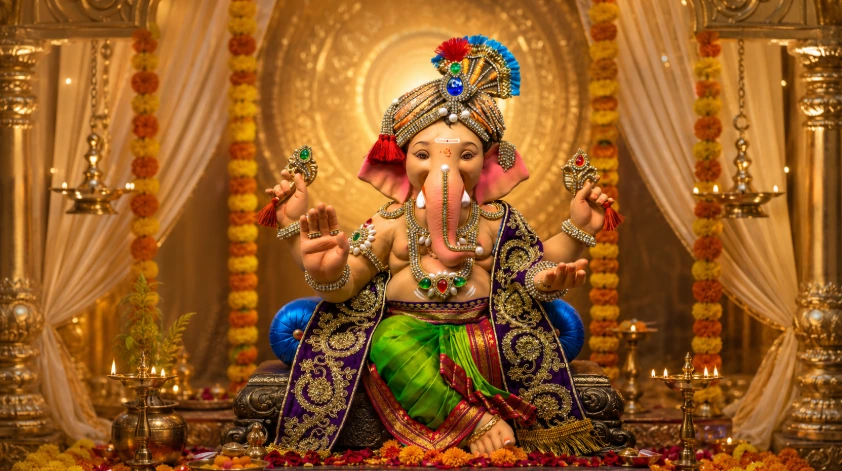

Ganesh Chaturthi 2026 falls on Monday, September 14 — so if you searched “when was Ganesh Chaturthi in 2026” expecting it to have passed, the good news is that it hasn’t. The festival is still about two months away, and Ganeshotsav will run through Friday, September 25, when Anant Chaturdashi brings the grand visarjan processions.
The confusion is understandable, because two different Ganesha festivals carry the year 2026. Ganesh Jayanti, observed on Magha Shukla Chaturthi, already took place on Thursday, January 22, 2026 — a one-day observance especially significant in Maharashtra and the Konkan region. Ganesh Chaturthi, the big ten-day Ganeshotsav in the Bhadrapada month, is the September festival. If someone told you “Ganpati already happened this year,” they most likely meant January’s Ganesh Jayanti.
Ganesh Chaturthi 2026: Key Dates and Timings
| Event | Date and time |
| Ganesh Chaturthi (Sthapana day) | Monday, September 14, 2026 |
| Chaturthi tithi | Begins 7:06 AM on Sep 14, ends 7:44 AM on Sep 15 |
| Madhyahna Sthapana muhurat | Approx. 11:02 AM – 1:31 PM |
| 1.5-day (Dedh Din) visarjan | Tuesday, September 15 |
| 3-day visarjan | Wednesday, September 16 |
| 5-day visarjan (Gauri-Ganpati) | Friday, September 18 |
| 7-day visarjan | Sunday, September 20 |
| Anant Chaturdashi (main visarjan) | Friday, September 25, 2026 |
The midday Madhyahna window matters more than any other timing detail. Tradition holds that Ganesha was born during the middle portion of the day, which is why idol installation (sthapana) is performed then — for 2026, roughly between 11 AM and 1:30 PM, with minor variations by city. If the window is missed, sthapana during the evening Pradosh period is an accepted alternative; what families generally avoid is installing the idol during an inauspicious Bhadra period.
One lesser-known rule attached to this specific day: sighting the moon on Ganesh Chaturthi is traditionally avoided, as it is believed to bring Mithya Dosha — the risk of false accusation, rooted in the Syamantaka jewel legend. In 2026 the avoidance window on September 14 runs from about 9:01 AM to 8:09 PM. Anyone who catches the moon accidentally has a remedy: reciting the Syamantaka story or its associated shloka.
Why the Date Moves Every Year
Ganesh Chaturthi always falls on the same lunar date — Shukla Paksha Chaturthi (the fourth day of the waxing moon) in the month of Bhadrapada — but the Gregorian calendar date drifts because lunar months don’t align with solar ones. In practice the festival lands anywhere between mid-August and late September. Recent and upcoming years show the swing clearly: August 27 in 2025, September 14 in 2026, then back to September 4 in 2027. This is also why you should never reuse last year’s panchang timings; the muhurat is recalculated each year from the actual tithi.
A related nuance trips up many people planning visarjan: although Ganeshotsav is called a ten-day festival, the immersion on Anant Chaturdashi follows the Chaturdashi tithi, not a simple day count. In 2026 that tithi begins in the early hours of September 25, which is why the main visarjan lands eleven days after sthapana rather than exactly ten.
From Home Ritual to Public Festival
The festival celebrates the birth of Lord Ganesha, son of Shiva and Parvati — the remover of obstacles (Vighnaharta) worshipped first before any new venture, which is why students invoke him before exams and businesses before openings. The best-known birth legend tells of Parvati shaping a boy from turmeric paste to guard her door; Shiva, unaware, beheaded the child, then restored him to life with an elephant’s head. Loss and renewal sit at the core of the story, and the visarjan ritual echoes it every year.
For most of its history, Ganesh Chaturthi was a household observance. Its transformation into the massive public spectacle we know today happened in 1893, when freedom fighter Lokmanya Bal Gangadhar Tilak promoted large community celebrations in Pune as a way to unite people under colonial rule, where political gatherings were restricted. The sarvajanik (public) pandal tradition born then now defines the festival in Maharashtra, Karnataka, Telangana, Andhra Pradesh and Goa — Mumbai’s Lalbaugcha Raja alone draws crowds numbering in lakhs.
How the Days Unfold: Sthapana to Visarjan
The festival opens with Pran Pratishtha — mantras that invoke the living presence of Ganesha into the clay idol — followed by Shodashopachara puja, sixteen forms of offering that include bathing the idol, sandal paste, flowers, incense and durva grass. Twenty-one modaks and twenty-one durva blades form the classic offering set; modak, the steamed sweet dumpling of coconut and jaggery, is considered Ganesha’s favourite, with karanji as its fried cousin.
Daily rhythm through the festival is built around morning and evening aarti — Sukhkarta Dukhaharta and Jai Ganesh Deva are the ones you’ll hear from nearly every home and pandal. Families choose their own farewell day: the 1.5-day Dedh Din tradition (install Monday, immerse Tuesday afternoon) remains the most common home format in Maharashtra, while housing societies typically keep Ganpati for the full run to Anant Chaturdashi. The 5-day option coincides with Gauri-Ganpati, when Goddess Gauri is welcomed alongside. Odd-numbered days — 1.5, 3, 5, 7 — are the traditional visarjan choices.
At immersion, a final uttarpuja thanks the deity, the idol is shifted slightly from its place to signal departure, and the procession moves to water with the chant “Ganpati Bappa Morya, pudhchya varshi lavkar ya” — come again early next year.
Celebrating Responsibly in 2026
The environmental cost of the festival has reshaped how it’s celebrated, and the shift is practical, not just symbolic. Plaster of Paris idols don’t dissolve — they sink, leach chemical paints into lakes and rivers, and wash back onto shores for weeks. A natural clay (shadu mati) idol dissolves within hours, and if immersed at home in a bucket or tub, the clay water can go straight to garden plants — earth returning to earth. Cities across Maharashtra now provide artificial immersion tanks precisely so that large idols stay out of natural water bodies.
If you’re buying an idol this year, two practical notes from how the market actually behaves: quality eco-friendly clay idols sell out early, so purchasing two to three weeks before September 14 is safer than a last-minute search, and checking that decorations avoid thermocol and plastic saves an awkward sorting job before immersion — flowers and cloth drapes are removed from the idol before it enters the water in any case.
Schools lean into this side of the festival too: eco-idol workshops, rangoli and essay competitions, and assembly talks on pollution-free visarjan have become as much a part of student Ganeshotsav as the aarti itself.
Quick Answers
When was Ganesh Chaturthi in 2026 — or is it still ahead?
Still ahead. Ganesh Chaturthi 2026 is on Monday, September 14, with the festival concluding on Anant Chaturdashi, Friday, September 25. What has already passed in 2026 is Ganesh Jayanti — the Magha-month birth anniversary observed on January 22. The two are separate festivals: Jayanti is a one-day observance without mandatory immersion, mainly celebrated in Maharashtra and Konkan, while Chaturthi is the pan-Indian ten-day Ganeshotsav with sthapana and visarjan.
When was Ganesh Chaturthi in 2025?
Wednesday, August 27, 2025, with Anant Chaturdashi visarjan on September 6, 2025. The 2026 festival falls nearly three weeks later in the Gregorian calendar — a normal swing for a lunar-calendar festival.
What is the Ganesh Chaturthi date for 2027?
Saturday, September 4, 2027. Planning further ahead only requires remembering the rule: Bhadrapada Shukla Chaturthi, somewhere between mid-August and late September each year.
Two Months Out: What to Do Now
If you’re hosting Ganpati at home this year, mid-July is exactly the right time to make the two decisions that get harder later: how many days you’ll keep the idol (which determines your visarjan date — September 15 for Dedh Din, September 18 for Gauri-Ganpati, September 25 for the full run) and whether you’re switching to a clay idol this year. Pandits in metro cities get booked out for the September 14 Madhyahna window well in advance, and the best eco-friendly idol makers work on pre-orders. Sort those two things now, and everything else about Ganeshotsav 2026 — the modak, the decorations, the aarti — falls into place easily.
